Day 1: Arrival in Marrakech – Chaos and Color
Touchdown in Marrakech, and immediately you’re hit by the city’s energy. Noise, colors, smells—all collide in the medina. Don’t rush to a hotel; wander first. The streets are narrow, sometimes confusing, always alive. You’ll hear vendors calling, children playing, the soft clatter of carts. Stop for mint tea at a small café tucked behind the souks. Sip slowly, watch the people, and let the city sink in.
The Jemaa el-Fnaa square is the heart of Marrakech. By day, it’s stalls of fresh fruit, spices, and street food. By night, it transforms—storytellers, snake charmers, fire dancers. Sit on a terrace above the square, take it all in. You’re not just seeing Marrakech—you’re feeling it pulse.
Day 2: Marrakech Medina & Gardens
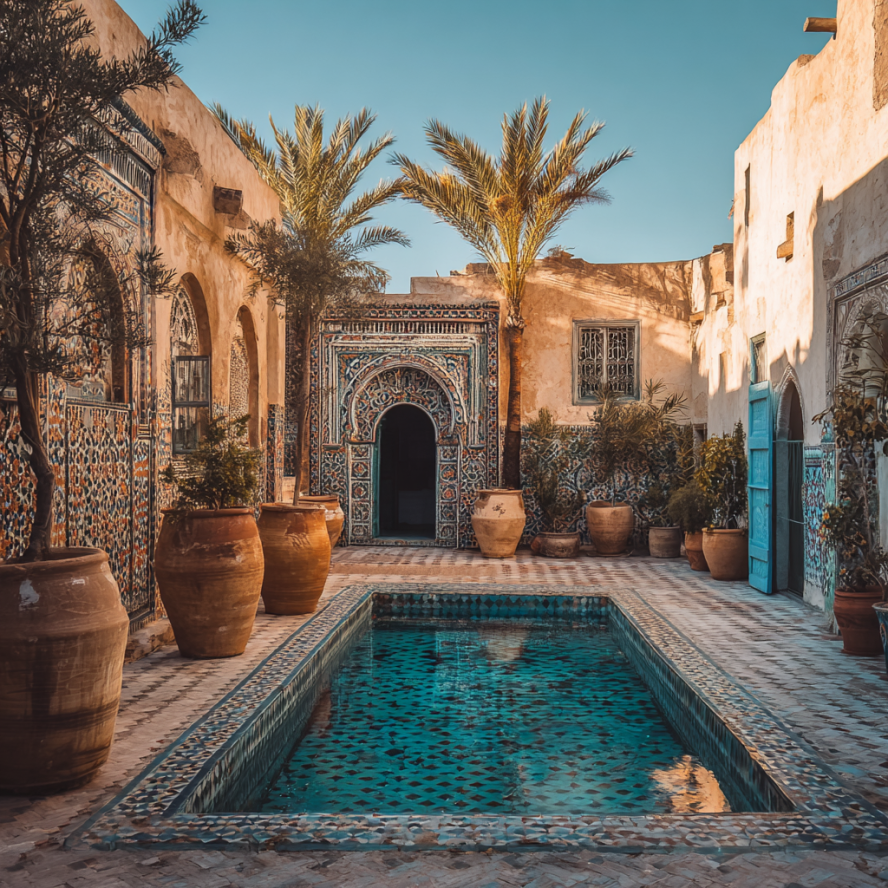
Start the day early with a walk through the medina. Get lost on purpose; some of the best spots are hidden behind doors or around corners you’d never expect. Visit the Bahia Palace, an oasis of intricate architecture and quiet courtyards, then wander into the souks for local crafts. Lanterns, ceramics, rugs, spices—touch, smell, maybe haggle a little.
Later, escape the chaos in one of Marrakech’s gardens. The Majorelle Garden is famous, but the smaller ones, like the Menara, offer calm reflection, palm trees, and water that mirrors the sky. Morocco is about contrast—chaos and calm, noise and stillness—and today you taste both.
Day 3: Atlas Mountains – Villages & Views
Leave the city behind for a day trip into the Atlas Mountains. Terraced fields, snow-capped peaks, and tiny villages await. Stop in Imlil or similar mountain towns. Walk along trails that wind through valleys, cross streams, and smell the crisp mountain air. Chat with locals if you can—they’re often curious about travelers, happy to show a path, or share tea and stories.
Lunch might be tajine cooked in a clay pot over a small fire. The flavors are simple but unforgettable. You’ll see goats on rooftops, women carrying baskets of vegetables, children running along dirt paths. Morocco outside Marrakech is slower, quieter, and still full of life.
Day 4: Head to the Desert – Merzouga & the Sahara
From the mountains, the road leads east to Merzouga, the edge of the Sahara Desert. Dunes rise like waves frozen in sand. The first glimpse is almost surreal—you feel tiny, swallowed by endless golden hills. Ride a camel, trek up dunes for sunset, watch the sky turn pink, orange, and violet.
Spend the night in a desert camp, under a blanket of stars. No city lights, just the soft wind and the occasional distant howl. Music may drift from the campfire, a local guitar or drums. Eat traditional Berber food: couscous, vegetables, sometimes lamb. Fall asleep in a tent, the sand cold beneath, the Milky Way above. You’ll remember this night forever.
Day 5: Sahara Sunrise & Rissani Markets
Wake early for the sunrise over the dunes. It’s quiet, majestic, humbling. Walk barefoot in the sand, listen to the desert wake. After breakfast, drive to Rissani, a small town with a traditional market. Fewer tourists here, more locals, more life. Smell spices, touch handmade crafts, watch donkeys and camels pass by.
From here, the road winds toward Erfoud or Tafilalet, small towns full of character. Morocco isn’t just the Sahara—it’s mountains, towns, and markets all woven together, and today you get a taste of both sand and culture.
Day 6: Coastal Retreat – Essaouira
Time to swap sand for sea. Drive west toward the Atlantic coast to Essaouira, a port town with history and charm. Wind whips through streets lined with blue-and-white walls, fishing boats bob in the harbor, seagulls cry overhead. Walk the old medina, browse art shops, or just sip mint tea and watch the waves.
Seafood here is incredible. Fresh grilled fish, calamari, sardines—the smell, the taste, the ocean breeze—pure bliss. End the day on the ramparts, watching the sun sink into the Atlantic. Morocco is diverse, and Essaouira is a perfect contrast to deserts and mountains: calm, breezy, and full of life.
Day 7: Return to Marrakech – Markets & Farewell
On your last day, head back to Marrakech. Stop at any villages or roadside cafes you missed on the way in. Back in the city, revisit your favorite spots: the medina, the souks, the cafes. Maybe grab a last tagine, sip final mint tea, buy souvenirs, or simply wander aimlessly.
Morocco isn’t a country you finish—it’s a country you experience. Seven days is just enough to scratch the surface, to see deserts, mountains, markets, and coastlines—but the sights, smells, and colors stay with you long after your plane takes off.
Tips for Traveling Morocco
Haggle, respectfully. Markets expect it. Smile, joke, and be kind.
Dress modestly, especially in small towns and rural areas.
Travel by car or bus for longer distances; trains cover some routes, but roads give flexibility.
Stay in riads (traditional guesthouses) for authentic experiences.
Hydrate and protect yourself from sun in deserts and mountains.
Why This Route Works
Seven days is short, but this itinerary mixes the chaos of cities, the quiet of mountains, the magic of deserts, and the calm of the coast. It’s structured but flexible—perfect for wandering, for discovering, for tasting Morocco at your own pace. Each day brings contrast: noise and silence, spice and sweetness, sun and ocean breeze. You’ll return home exhausted, yes, but also exhilarated, full of stories, colors, and memories.
Morocco is messy, beautiful, chaotic, and serene—all at once. Markets, mountains, deserts, and seas—each part tells a story, invites a pause, demands curiosity. Follow this route, but also leave room for detours, surprises, and moments that can’t be planned. Talk to locals, try the street food, walk down alleys with no map. Morocco isn’t just a destination—it’s a living, breathing experience that will stay with you forever.
So pack light, bring curiosity, and let the country surprise you. Seven days is just enough to get hooked—and once Morocco grabs you, you’ll be planning your return before you even leave.